
PET (polyester) film can be considered for product identification and demanding applications. Its suitability for heat, chemicals or outdoor use depends on the specific face stock, adhesive, ink and finish. Share your use conditions so we can review and validate the construction.
When PET is the right choice
| Condition | What to confirm |
|---|---|
| Moisture | Check adhesive, print and finish on the intended surface through the expected exposure. |
| Heat | Specify temperature, duration and cycles; validate the selected construction. |
| Oil or chemicals | Identify the substance and contact conditions; review ink, adhesive and finish. |
| Outdoor use | Confirm UV, weather and service life requirements; test or review relevant evidence. |
| Flexible packaging | Check conformability on the container and compare with other film options. |
Compare PET, BOPP and paper against the actual surface, environment, appearance and project cost.
PET stocks we run
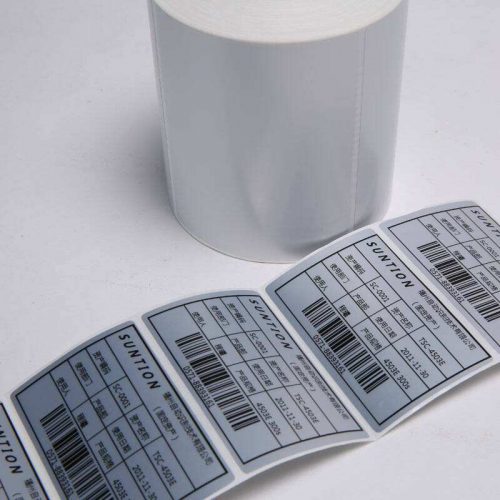
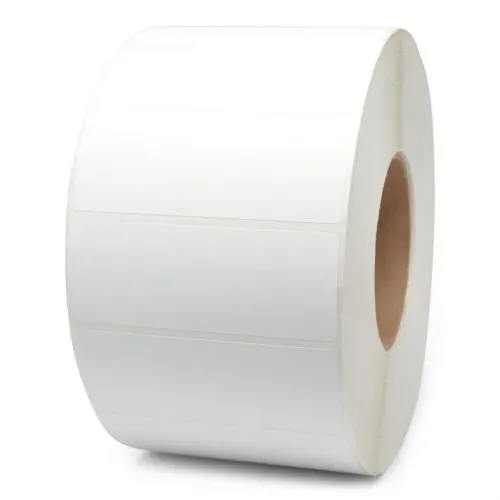
| Face | Finish and typical use |
|---|---|
| Clear PET | Gloss; transparent appearance. Confirm heat and oil exposure for the complete construction. |
| White PET | Gloss or matt; rating plates, asset tags and instruction labels. |
| Metallized PET (met-PET) | Bright silver; electronics, automotive and appliance nameplates. |
Metallized polyester has its own page — see metallized labels for the silver and met-PET range.
Printing and finishing
| Web width | 300 mm standard, 450 mm on one press (print length ≤ 380 mm) |
| Colours | Flexo up to 12 · PS Plate up to 7 + 1 · Digital CMYK + white |
| Surface finishes | Gloss lamination · matt lamination · varnish · printable matt varnish |
| Finishing | Rotary and flat die-cutting · hot foil stamping · slitting to roll · variable data and QR coding |
| Adhesion aid | Corona treatment for low-energy film surfaces |
| Minimum order | No fixed minimum label quantity; minimum order value depends on material and production process and is confirmed in the quotation. |
White ink on the digital press means clear and metallized polyester can be run in short quantities without cutting a plate — useful for a first order or a variant you are still testing.
Tests to discuss for your application
Agree the relevant tests, methods and acceptance criteria for the selected construction and application:
- High temperature resistance — edge lift, adhesive ooze and legibility after the customer’s own heat cycle
- Low temperature resistance — application temperature versus service temperature, tested separately
- Holding power — shear adhesion under sustained load
- RoHS — for labels going onto electrical and electronic equipment
Inspection items and methods are confirmed for each order. Our equipment includes high-speed inspection and inline vision systems; their detection capability depends on the material, artwork and selected settings.
What to send us
- Label size, and which edge runs in the web direction
- What the container is made of, and whether it is smooth, textured or curved
- Peak temperature, how long it is held, and how many cycles
- Any chemical, oil or solvent the label will meet
- Quantity, and whether you need roll or sheet
A representative container helps us review a practical sample and test plan; confirm the test conditions and acceptance criteria with us.
Related: All label materials · BOPP labels · Metallized labels · Label Laboratory