
Printing Services
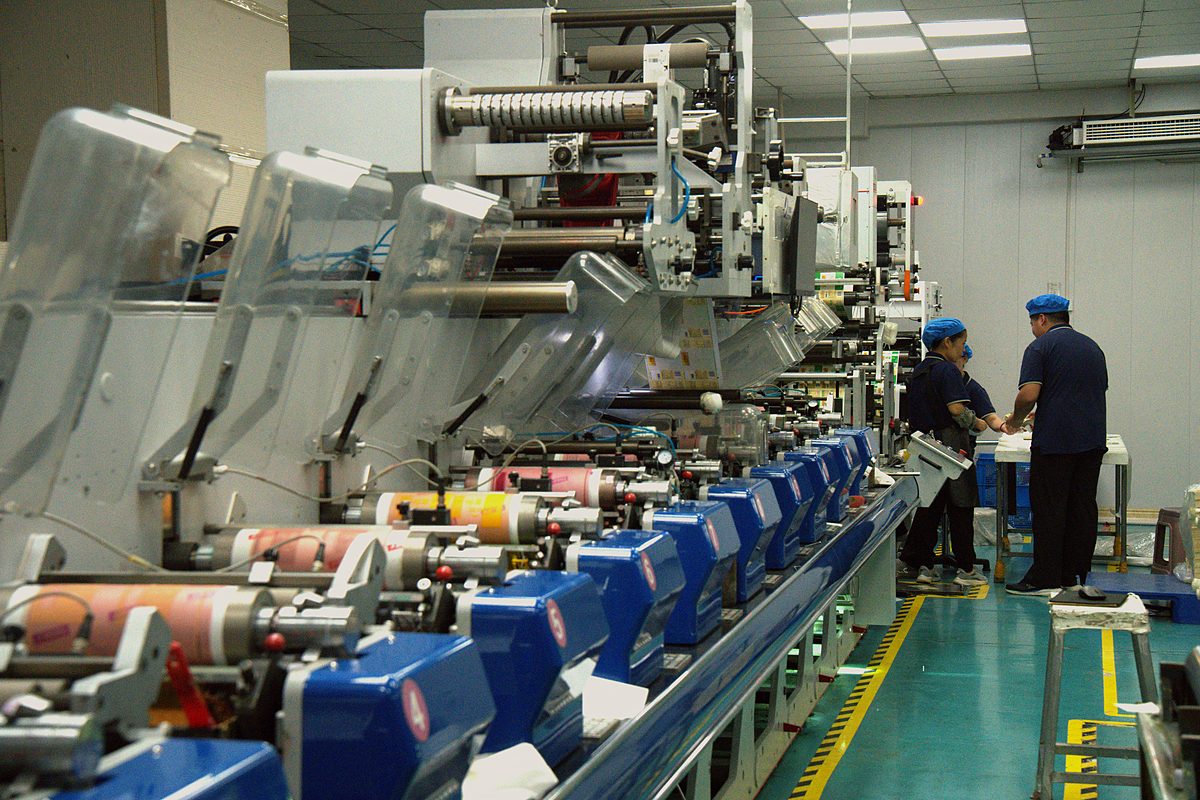
Four printing processes and a full set of decoration options. This page explains what each one does, when it is the right choice, and what it costs you in tooling and lead time.
Choosing a Printing Process
Swipe left or right to compare all columns.
| Process | Best for | Web width | Colours | Plate cost |
|---|---|---|---|---|
| Flexographic | Long runs, colour consistency across batches | 300 mm | up to 12 | Yes |
| PS Plate | Fine text, high ink density, small formats | 300 mm · 450 mm (one press) | up to 7 + 1 | Yes |
| Screen | Heavy ink lay-down, tactile and high-opacity effects | 300 mm | Special effects | Yes |
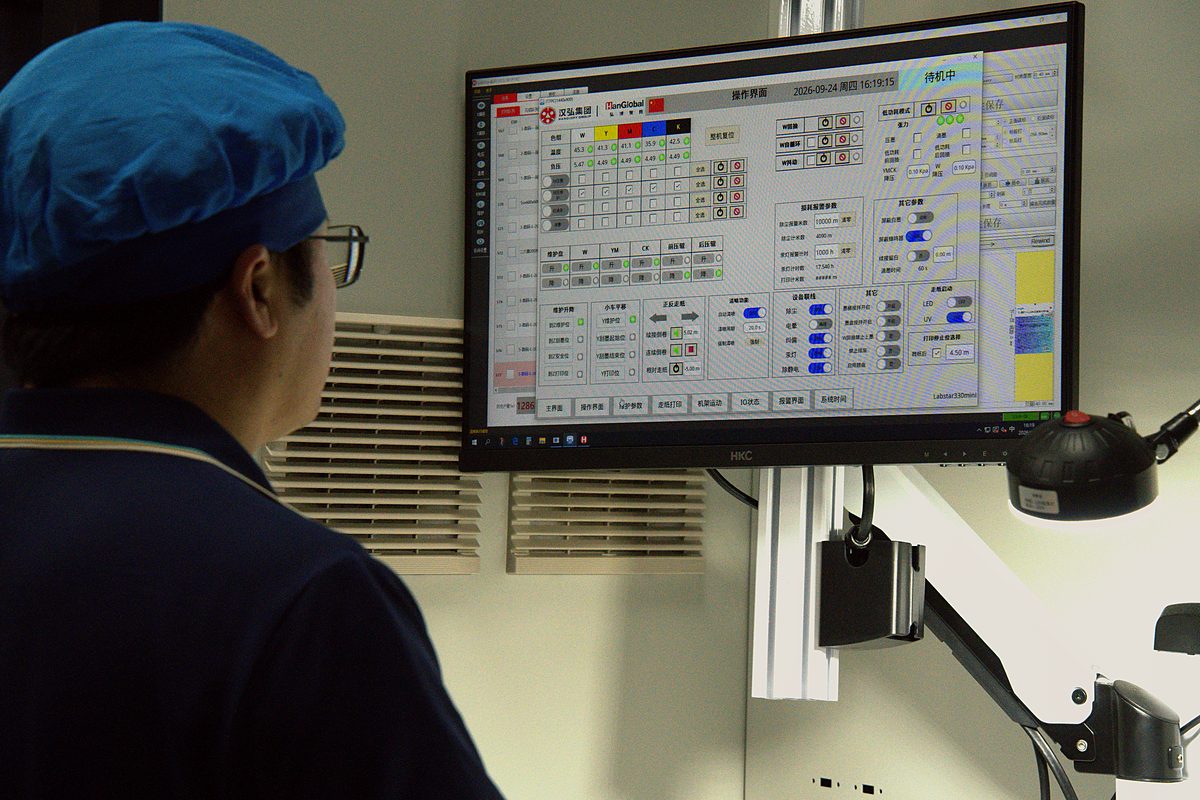
| Digital UV inkjet | Short runs, variable data, samples | up to 322 mm | CMYK + white | None |
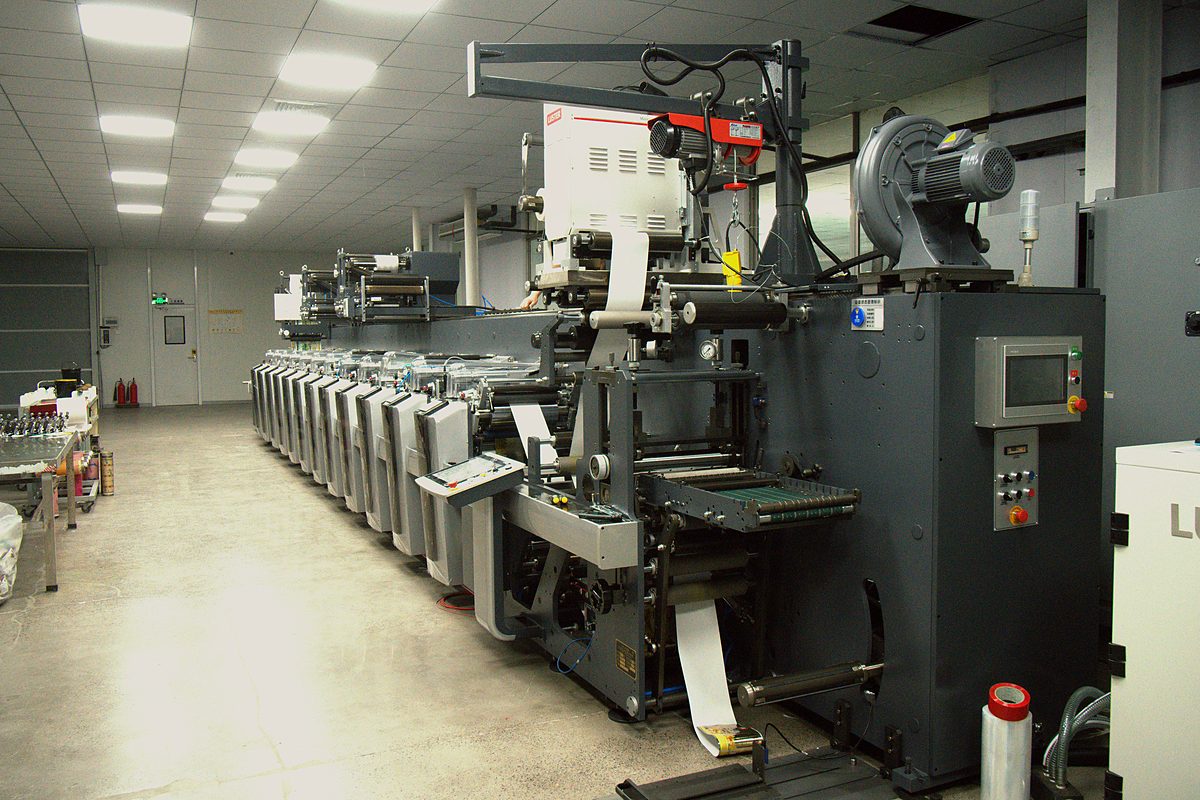
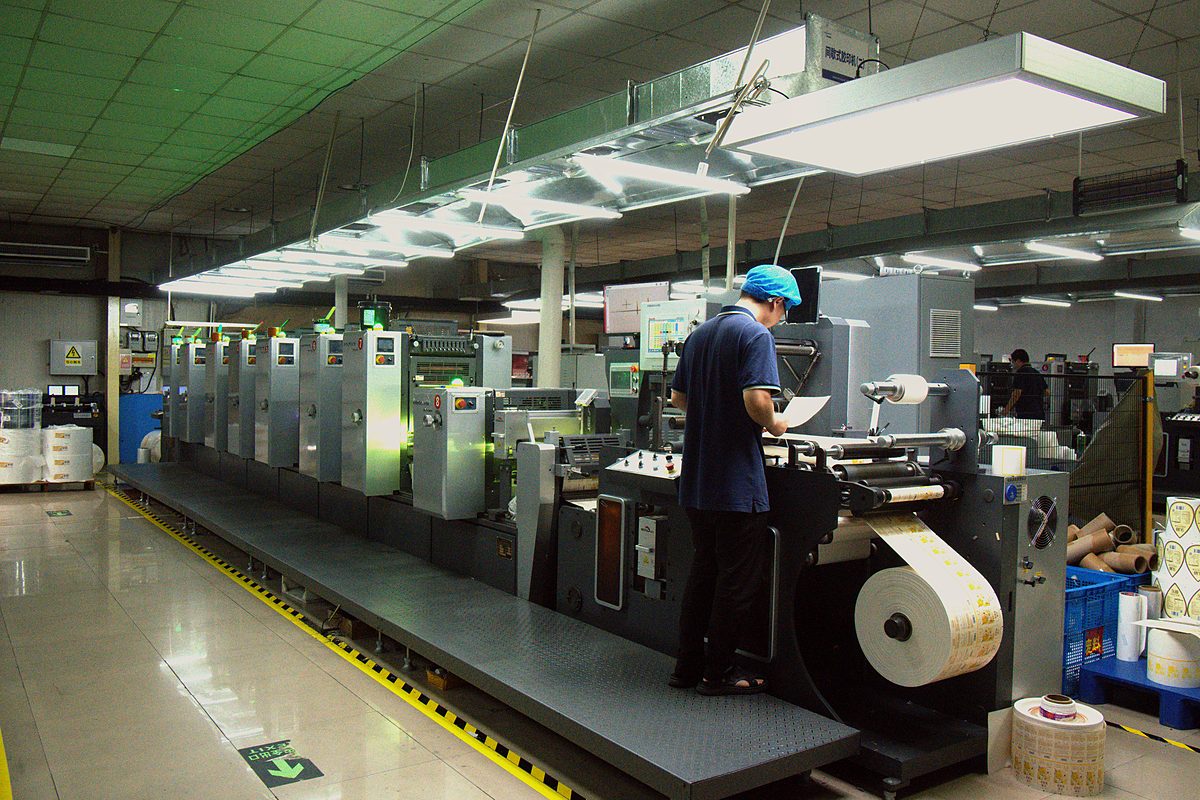
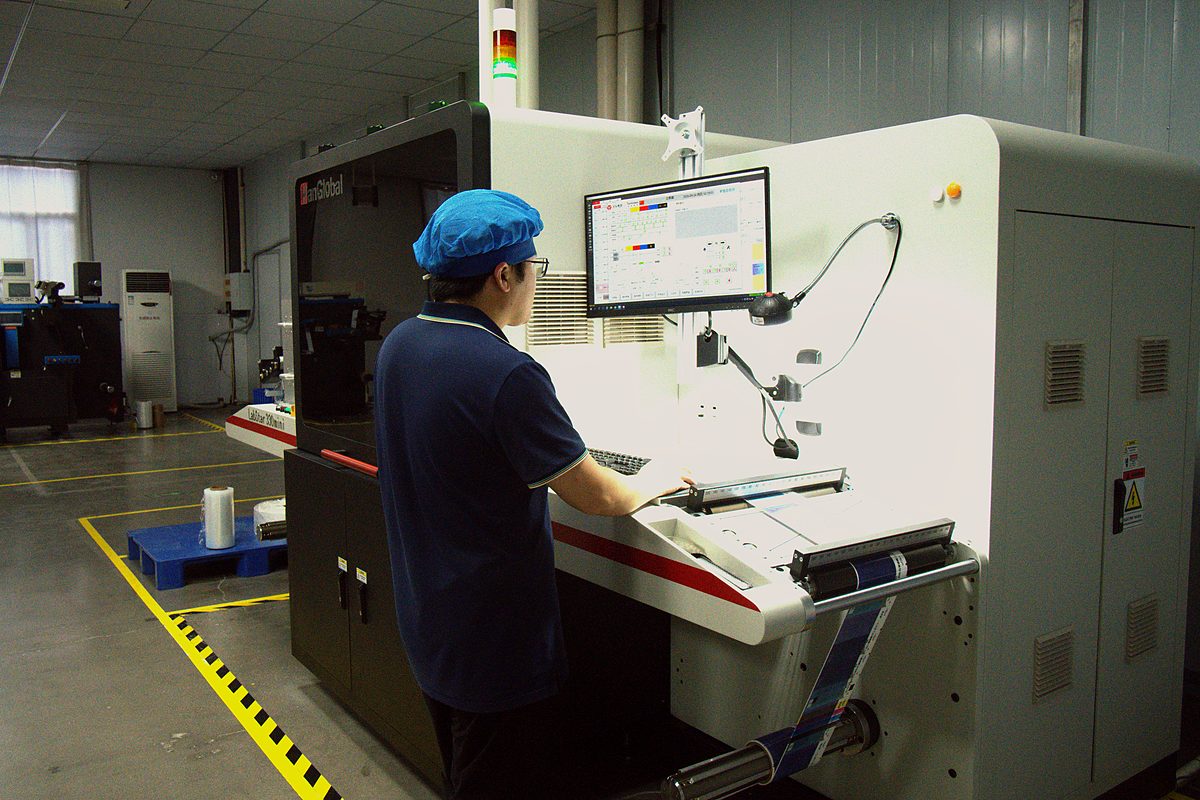
The suitable printing route depends on label size, material, quantity per design, colours and finishing. We compare the complete production requirements when preparing your quotation.
Colour Printing
CMYK process printing
Four-colour process reproduces photographs and gradients from a single set of plates. It is the economical choice when artwork contains images or many colours. Process colour cannot hit every brand colour exactly — highly saturated oranges, greens and blues sit outside the CMYK gamut.
Spot colour printing
A spot colour is mixed as a specific ink rather than built from CMYK. Where brand colour matching matters, we agree a reference and acceptance criteria for the selected material and process. Our flexo press carries up to twelve colour stations, so process colour and several spot colours can run together in a single pass.
Spot colours are mixed to Pantone reference and verified under a standard light source. Send a printed reference if you have one — a Pantone number alone leaves room for interpretation.
White ink on film
White ink controls opacity and the appearance of colour on clear and metallic materials. Identify white areas, transparent windows and exposed metallic areas in the artwork. We print white on both conventional and digital lines — the digital press carries a dedicated white station, which means short runs on clear or silver film no longer require plates.
Metallic and Tactile Effects
Hot foil stamping
Metallic foil applied with a heated die under pressure. It gives the brightest metallic finish available and a slight physical impression in the material. Standard on wine, spirits and cosmetics. Requires a stamping die, charged separately and reusable on repeat orders.
Cold foil
Cold foil uses an adhesive transfer process and can be combined with overprinting. Foil choice, face material and the printed design influence the result. We review hot and cold transfer routes against the desired appearance and production specification.
Screen printing
Lays down a far thicker ink film than flexo or PS plate. Used for raised tactile detail, high-opacity spot colours and effects that need physical depth rather than just visual contrast.
Security and Anti-Counterfeit
| Technique | Inspection role and limits |
|---|---|
| Invisible ink | UV-responsive marks can support an agreed inspection process using a compatible light source. Visibility and durability depend on the ink, substrate and viewing conditions. |
| Microprinting | Fine text inspected under suitable magnification; reproduction difficulty depends on text size, print quality and copying method. |
| Guilloche | Fine interlocking line patterns can provide a visual comparison feature. Effectiveness depends on the design, printing and inspection method. |
| Variable data | Unique identifiers can support checks when linked to a maintained verification system. Printing a code alone does not detect duplicates. |
These features can be combined as part of an agreed authentication process. Confirm the ink and material, inspection equipment, reference samples, data system and acceptance criteria for the project. No single printed feature guarantees authenticity or prevents copying.
Variable Data Printing
Every label carries different content: serial numbers, QR codes, batch codes, or entirely different artwork on each one.
| Method | What it can vary |
|---|---|
| Inkjet coding | Codes and numbers added onto a pre-printed label — economical for large volumes |
| Digital press | The entire label, in full colour, different on every piece |
Send your data as CSV or Excel. Typical uses: track-and-trace for regulated products, promotional unique codes, asset tags with sequential numbering, and multilingual runs where only the text block changes.
What Affects Your Price
- Colour count — each additional colour adds a plate and press setup
- Foil — the most expensive single addition; consider whether cold foil achieves the effect
- Quantity — plate and setup costs spread across the run, so unit price falls sharply with volume
- Material — face stock, adhesive, liner and protective finish are priced as the selected construction
- Tooling — dies and foil plates are charged once and reused on repeat orders
If you have a target budget, share it with the required appearance and performance. We can review alternative material, colour and finishing combinations for quotation.
Materials and finishes → · Press specifications → · How an order runs →
Not Sure Which Process You Need?
Send your artwork and quantity. We will tell you which process suits it and what each option costs.